
Blog
How much does a website cost
“How much does a website cost?” is the question we hear most often, and we always answer with another: what kind of website? A simple brochure site that goes live in a few weeks and an online store with inventory sync, payments and customer accounts differ not by percentages but by multiples. Owners also often […]
- 13 October 2026
- 16 min read

Articles
How much does a website cost
“How much does a website cost?” is the question we hear most often, and we always answer with another: what kind of website? A simple brochure site that goes live in a few weeks and an online store with inventory sync, payments and customer accounts differ not by percentages but by multiples. Owners also often get three quotes for the same job that are so far apart it is hard to know whom to trust.
Below we break the price down the way we do when estimating a project: the stages, the people involved, what drives the budget up, where you can save honestly and which post-launch costs get forgotten. We deliberately do not quote amounts, because they depend on scope and age fast. Instead, you will be able to read any proposal and ask a contractor the right questions.
Why quotes for “the same website” differ so much
A website is not a product off the shelf. It is a team’s work measured in hours. The price is almost always the number of hours multiplied by each specialist’s hourly rate, plus third-party costs: licenses, paid services, photos, translations. So when two proposals differ by a factor of three, there are usually only three reasons behind it.
- Different scope. One contractor priced the design of the home page and one page template; another priced every page type, the mobile layouts, the copy and the analytics setup. Both call it a “turnkey website”.
- Different approach. An off-the-shelf theme with minimal changes, a theme with deep customization, or a fully custom design and build are three different products with different prices, speed and room to grow.
- Different team. A solo freelancer, a small studio and a large agency all have different hourly rates, but also a different set of roles, processes and guarantees.
That leads to the first rule we give every client: compare the scope of work, not the totals. If a proposal is a single line reading “Website development” followed by a number, you cannot tell what you are paying for or hold anyone to account later.
What the price is made of: the stages of development
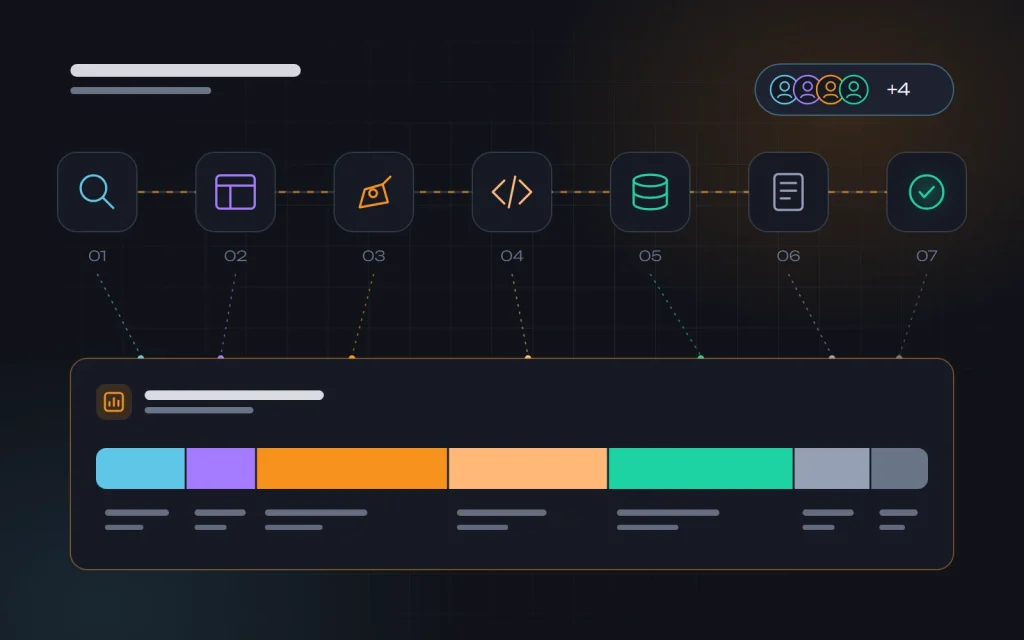
Every commercial website, from a landing page to a large catalog, follows roughly the same path. What changes is how deep each stage goes. Here is how we split a project when we estimate it:
| Stage | What it includes | What drives the effort |
|---|---|---|
| Discovery and spec | Briefing, competitor review, site structure, keyword research, technical specification | Number of sections, complexity of logic, materials you already have |
| Wireframes | Page layouts: blocks, order, user flows | Number of unique page types |
| Design | Visual concept, desktop and mobile mockups, UI kit | Template or custom design, number of mockups, illustrations |
| Front end | Responsive markup, animations, interactive elements | Number of templates, interface complexity, speed requirements |
| Back end and CMS | Admin panel, catalog, forms, accounts, integrations | Features, third-party services, non-standard logic |
| Content | Copy, photos, product import, translations | Who prepares the content and how much of it there is |
| Testing and launch | Device checks, speed, basic SEO, analytics, deployment to hosting | Number of pages and scenarios, language versions |
A few important details about each stage.
Discovery is the stage people most want to cut. “We already know what we need.” But this is exactly where you decide which pages the site will have, which searches they will target and what a visitor is supposed to do. Mistakes here are the most expensive: reworking a wireframe takes hours, reworking a finished site takes weeks. We always start with structure and keyword research, and we covered this in more depth in “On-page SEO basics”.
Design is priced by page type, not by page count. A site with 200 articles may have only five unique templates: home, listing, article, contacts, service. Meanwhile a 15-page corporate site can have 12 different layouts because every page was designed “its own way”. It is the number of unique templates, not the total amount of content, that has the biggest effect on the cost of design and front-end work.
Testing is not a “bonus at the end”. Forms, rendering on different phones and browsers, speed, redirects and analytics all need checking. If a proposal has no testing stage, it is either hidden in the price or will not happen at all, and the second is more common.
Who works on a website: the roles in the team
Team composition is another reason prices differ. Even if one person builds the whole project, somebody still performs every one of these roles, just with varying quality. In a studio, a typical commercial website involves:
- Project manager keeps the deadlines, the scope and the communication with you.
- Analyst or marketer turns your business, competitors and audience into a structure and a specification.
- UX/UI designer designs user flows and mockups for every screen size.
- Front-end developer turns mockups into fast, responsive markup.
- Back-end developer sets up the CMS, the business logic and integrations with CRM, payments, shipping and inventory.
- SEO specialist handles keyword targeting, meta tags, internal linking, clean URLs and the technical foundation.
- Copywriter or content manager writes the copy, fills the catalog and prepares images.
- QA tester checks that everything works as intended on real devices.
A freelancer who “does everything” is usually cheaper precisely because some roles are skipped: there is no separate discovery, testing is superficial, and SEO stops at installing a plugin. That may be fine for a simple site; for a store or a lead-generating site, skipped roles come back as rework.
What affects the budget the most
When we estimate a project, seven factors have the biggest impact on the final figure. Once you know them, you can manage the price deliberately: simplify one thing, move another to a second phase.
1. Type of site and number of unique templates
A landing page is one long page built around a single offer. A business-card site is a handful of pages about the company. A corporate site adds service sections, case studies, a blog, team and careers pages. An online store brings a catalog, filters, product pages, a cart, checkout and a customer account. Each step up adds not just pages but new templates and new logic.
| Type of site | What it usually includes | Typical timeline |
|---|---|---|
| Landing page | One page, lead form, analytics | 2–4 weeks |
| Business-card site | 3–7 pages, contacts, basic SEO | 3–6 weeks |
| Corporate site | Services, case studies, blog, several languages, CRM integration | 2–4 months |
| Online store | Catalog, filters, cart, payments, shipping, sync with an accounting or ERP system | 3–6 months or more |
These timelines assume content and approvals arrive on time; waiting for them delays projects more often than development does.
2. Design: ready-made template or custom
A ready-made theme is cheaper and faster, but you get what hundreds of other sites already have, and every non-standard change means fighting someone else’s code. A custom design costs more up front, but it is built around your audience, your user flows and your brand. A middle ground is a design system built from proven components.
3. Features and integrations
A price calculator, online booking, a customer account, sync with a CRM or accounting system, payment gateways and shipping providers, multiple currencies: each of these can take more time than the entire design. Integration complexity also depends on the external service’s documentation and reliability. That is why we always ask for API access already at the estimate stage.
4. Content
Who writes the copy, takes the photos and moves thousands of products from the old site? If the contract does not say, the answer is you. Content is the most underestimated part of any project: a site can be technically ready and still sit empty for weeks. We explained how to prepare copy that people read and that works for search in “Writing content for your website”.
5. Language versions
A second language is more than a translation. It means separate URLs, correct hreflang tags, translated interface elements, forms, emails and meta tags. Multilingual support should be built in from the start; adding it “later” is always more expensive.
6. Platform
WordPress, WooCommerce, OpenCart, Shopify or a custom build on a framework: each option has its own entry cost and its own cost of ownership. A popular CMS is cheaper to build and maintain because there are many specialists who know it. Custom development makes sense when your business logic is genuinely non-standard. Choose the platform for the task, not because “it is the only thing the contractor knows”.
7. Urgency and process
“We need it yesterday” almost always means several people working in parallel, overtime and more risk. That is why the contract should state how many rounds of revisions each stage includes.
Website builder, template or custom development
Most clients end up choosing between three approaches. An honest comparison looks like this:
- Website builder. The cheapest start and a fast launch, but you are renting a platform: monthly fees, limited control over code, speed and SEO, and a difficult migration later. Good for testing an idea or for a temporary page.
- A CMS theme with customization. A sensible compromise for smaller projects. The key is choosing a well-built theme that is not overloaded with features, and planning from day one what will need to be rewritten.
- Custom design and development. A higher initial budget, but the site is built around your processes, runs fast and is easy to extend. For online stores and sites that bring in most of your leads, this often turns out cheaper in the long run.
The key idea: a cheap start does not mean cheap ownership. Over the years, add-ons, workarounds and rework can exceed the original price difference.
Fixed price or time and materials
Besides the amount itself, it matters how that amount is calculated.
A fixed price works well when the scope is clear and described in detail: the list of pages, features and integrations. You know the budget in advance, and the contractor carries the risk of underestimating. The flip side is that any change outside the specification becomes additional work. A fixed price is only as fair as the specification behind it.
Time and materials, where you pay for hours actually spent, suits complex projects whose requirements are refined along the way, and ongoing development after launch. You pay only for work done, but you should receive regular reports: what was completed, how long it took and what comes next.
We most often combine the two: the first phase, with a clearly defined scope, is priced as a fixed amount, and later improvements are billed hourly against an agreed plan.
Hidden costs after launch
Launch is not the finish line; it is the starting line. This is where most budgets drift away from expectations, because nobody mentioned the recurring costs. Here is what to plan for before you sign anything:
- Domain and hosting. An annual domain renewal and regular server fees. Cheap hosting is a common cause of slow pages and outages at the worst possible moment.
- Paid plugins, themes and services. Many extensions run on yearly licenses. Without renewal they stop updating, which becomes a security issue.
- Technical maintenance. CMS and plugin updates, backups, uptime monitoring, fixing small bugs. A site nobody has updated for years becomes vulnerable and slow.
- Third-party services. SMS and email platforms, live chat, maps, CRM, accounting sync, messaging integrations such as WhatsApp or Telegram: each has its own pricing plan.
- Payment processing fees. A percentage of every online payment that has to be factored into the store’s economics.
- Content and SEO. A site without fresh content and ongoing search work gradually loses rankings. This is continuous work, not a one-off service.
- Advertising. A new site has no organic traffic yet, so in the first months paid ads are often the only source of leads.
- Improvements. Real visitor data brings ideas for changes. Keep a reserve.
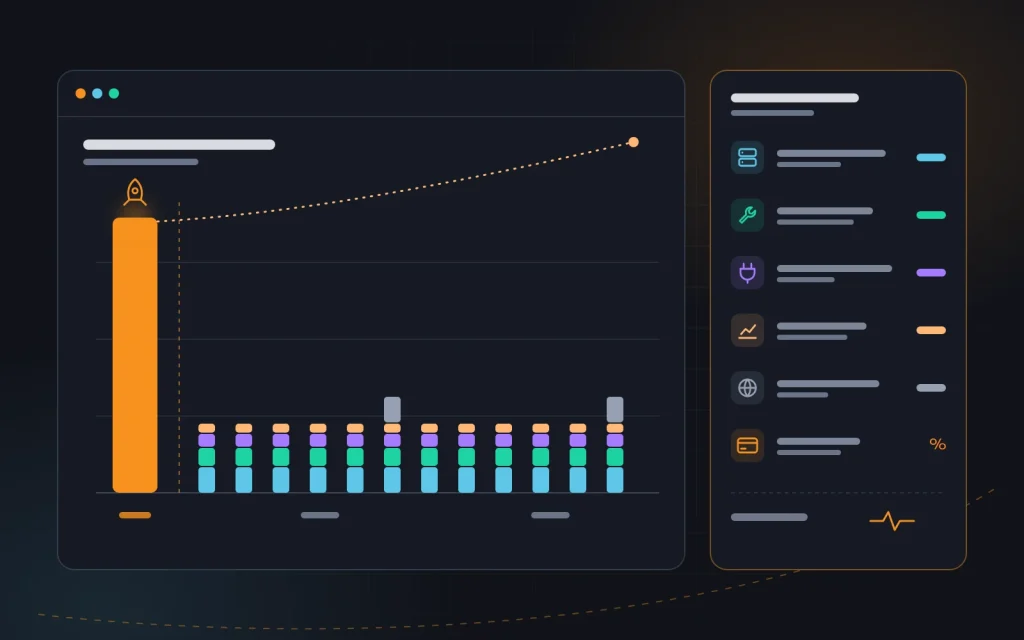
We recommend calculating not “the price of the website” but the total cost of ownership over one to two years: development plus all recurring costs. A builder with a stack of paid plugins often ends up costing more than a well-planned build with few dependencies.
A separate word about speed. A slow site is a hidden cost that never appears on an invoice: visitors leave, ads cost more, rankings slip. If your site already exists but is slow, the fix is usually website speed optimization, not necessarily a rebuild.
How not to overpay: our advice
You can save money honestly, not by cutting quality but by cutting what you do not need. Here is what works in our projects:
- Start with an MVP. Launch a minimal version that already brings in leads, and add complex features in a second phase once you have real data.
- Prepare materials in advance. Logo, brand colors, copy, photos, services and prices, sites you like. Waiting costs management hours.
- Reduce the number of unique templates. One shared layout for all service pages is cheaper and easier for visitors than twelve different ones.
- Do not pay for “wow” without a purpose. Heavy animations impress in a presentation but slow the site and do nothing for conversions.
- Build SEO in from the start. The right structure, URLs and meta tags during development cost a fraction of what it takes to rework a finished site for promotion.
- Put the scope in writing. The list of pages, features, integrations and revision rounds belongs in the specification or a contract appendix.
- Choose a widely used platform. You will not be tied to a single developer.
Where we advise against saving: discovery and structure, the mobile version, speed, testing and access rights. Every account, from the domain and hosting to the admin panel and analytics, should be registered to you, not to the contractor. And since most visitors now arrive on smartphones, the mobile version should be considered from the very first wireframe. More on that in “Succeeding with mobile-first indexing”.
What this looks like in practice
A typical situation: a B2B services company receives three proposals for a corporate website. The first is the cheapest, with a single line saying “turnkey website”. The second costs twice as much and lists the pages. The third is the most expensive, with a detailed estimate broken down by stage. The owner is leaning towards the first.
We suggest a simple step: ask the first contractor to break down the scope the same way the third proposal does. Usually it turns out that the cheapest option does not include copywriting, mobile mockups, analytics setup, deployment to hosting or an SEO foundation, and that revisions are limited to a single round. Add those separately and the gap narrows a lot, while the risks remain. Sometimes the cheapest offer really fits a simple task, but decide by comparing equal scopes.
Checklist before you sign the contract
- The estimate is broken down by stage and role, not a single line.
- There is a list of the pages, templates and features included.
- It is clear who prepares copy and photos and who imports the content.
- The number of revision rounds for each stage is fixed.
- Mobile layouts, basic SEO and analytics are explicitly included.
- There is a timeline and a payment schedule tied to stages.
- The domain, hosting and all accounts are registered to you.
- The warranty period and terms of ongoing support are written down.
- You know which recurring payments to expect after launch.
Frequently asked questions
Why can’t a studio give an exact price right away?
Because without understanding the scope, any number is a guess. We can give a range after a short brief and a precise estimate once the structure and feature list are agreed. A contractor who names a fixed price without asking anything is most likely pricing the bare minimum.
Can I build a cheaper site now and improve it later?
Yes, and it is often the right approach, as long as the first phase is designed with the next ones in mind. The trouble is when “later” means a rewrite because the architecture never allowed for growth.
How much does it cost to keep a website running each year?
It depends on what is included: domain, hosting, licenses, maintenance, third-party services, content and promotion. Ask your contractor to list them before development begins.
Which is better: a freelancer or a studio?
An experienced freelancer can handle a simple business-card site perfectly well. For an online store or a site with integrations, separate roles, a defined process and accountability for deadlines matter much more. Compare the scope of work, the portfolio and who will maintain the site after launch, not the format of the contractor.
Summary
The price of a website is the sum of stages, roles and the decisions you make: type of site, number of templates, design approach, features, integrations, content, languages and deadlines. The cheapest proposal rarely turns out to be the best value once you compare equal scopes and account for the costs of the next year or two.
Compare scope rather than totals, put it in writing, launch with a minimal working version, and do not cut corners on structure, the mobile version or speed. That way your budget pays for results rather than rework.
If you would like a transparent estimate for your project, get in touch with us. We build corporate websites and offer ecommerce development, and we lay the SEO foundation from day one so that search promotion later does not have to start with rework.


Need advice?
Tell us about the task — we will advise what to do, even if you end up working with someone else.